
What does engagement look like in your team?
There are 'shades of grey' when it comes to team engagement. There's more than just engaged or disengaged. We have measured more than 350 teams to learn more.
High trust and great support? Or feeling unvalued, perhaps resigned to 'how things are around here'?
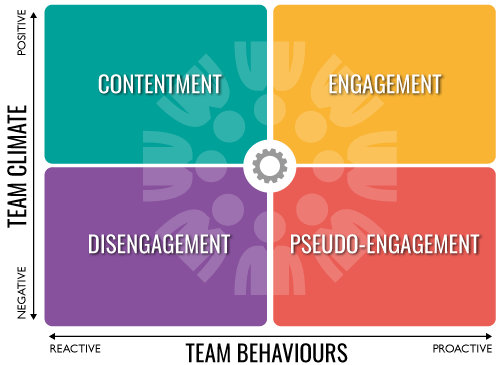
There are 'shades of grey' when it comes to team engagement. Some teams are engaged, or disengaged, but many teams are operating in a zone of contentment or pseudo-engagement. This was part of research findings published by Dr Amy Bradley. Surveylab was asked to help build and support a pilot programme for more teams to find out and explore their own zone.
In a little over 2½ years, working with Amy at Hult Ashridge Business School and analytics consultants Stillae, we have generated engagement reports for more than 350 teams in 150 organisations ranging from pharmaceuticals and electronics manufacturers to construction, retail, insurance and teams working in the NHS or HMRC.
1 in 4 teams are pseudo-engaged
Reviewing all the teams' results collected to date, almost one quarter of teams (24%) are in the zone of pseudo-engagement. On the face of it these teams appear motivated but this is only a positive spin on the team's engagement. For example, team members may be engaged individually but do not pull together as a team. The most prevalent themes in this zone are 'lack of teamwork' and 'managing upwards'.
The results show 37% of teams are in the zone of engagement. These teams are proactive, have a fun and positive atmosphere where team members trust and support each other. People feel stretched and are clear about where the team fits into the bigger picture.
11% of all the teams that we have measured to date are in the zone of contentment. A positive team climate exists but there's a lack of proactivity and dynamism.
Finally, 28% of teams show up in the zone of disengagement. Various factors contribute to a negative team atmosphere, including burnout, cliques and mistrust.
(More descriptions about the zones are in the research report linked at bottom of this post)
Building a Team Engagement Diagnostic
For the original research, James Court-Smith (founder at Stillae) used a DIY tool to host a basic survey to collect data for the first wave of participants. This was fine for a small pilot, but to research a larger number of organisations and teams, a more automated process was needed. This is when Surveylab came in: To create and host a tool to set up each team's survey, distribute survey links to team members, calculate the zone result and generate reports.
The diagnostic presents 25 statements to team members to rate their level of agreement. A formula looks at the relationship between the aggregrated scores of different groupings of these statements. This relationship determines which zone this team is in.
As well as the zone result, the team leader can review the themes raised and questions in their report, and discuss findings in their team to develop or reinforce team engagement and workplace culture.
When we had collected more than 200 teams' results, the group took the opportunity to revalidate the results. James then recalibrated the calculation to cater for outliers (the basic finding is unchanged). It would be a very interesting project (and no doubt very helpful in some teams) to develop the reporting further to show how strongly this team sits in its zone.
What zone is Your Team?
To get results for your team - contact Dan at Surveylab
Multiple teams? Use the tool across more teams in your organisation to support your internal development / management training. This offers further insight into team building, collaboration and the organisational culture.
"On behalf of the programme team, I just wanted to say a big THANK YOU, for all the hard work and enthusiasm you and your team have put into this process. The efficiency, regular updates and desire to communicate the survey well to our participants hasn't gone unnoticed, thank you, it's been a real pleasure to work with you on this."
Lisa Carlton, Warwick Business School
More Reading
The original report is available here:
Shades of Grey: An exploratory study of engagement in work teams (opens in PDF)