
Giving your employees a voice: How to make your employee survey unmissable
Too often, the survey launches and for some parts of the organisation all our efforts promoting the employee voice falls on deaf ears. Employees don't engage with the survey. Why is that?

"Your feedback is important"
We genuinely want everyone to take part in our survey! The potential to feedback and guide changes that make the organisation a better place to work and a positive impact on the customers is huge.
But too often, the survey launches and for some parts of the organisation our efforts promoting the employee voice falls on deaf ears. Employees don't engage with the survey.
Why is that?
Do they feel their feedback is not really important, that nothing's going to change, or do they simply not see the email?
Not everyone does email
"The CEO will send the announcement out at 1pm, and then we'll follow that with an email to all staff at 2pm."
Engaging front-line or non-desk based employees in surveys is challenging. It is all too easy to rely on email and feel 'task done' but for a lot of employees, they simply do not access, read or write emails like office based workers. Email is not how they know what's on their plate today - it isn't a crucial tool for their job.
Yet these employees' feedback is essential because we need as complete a picture as possible to inform our understanding and thinking for the whole organisation. If certain groups of staff are not represented in your survey data then your survey is about as useful as a chocolate teapot.
When we create inclusive ways to gather and share insights, we foster an environment where everyone feels listened to and valued. So how can you do that? Here, we outline a strategic approach to engage all employees, including all those who don't sit in front of a computer.
Your survey needs a mini marketing campaign.
Preparing for a successful survey
Before we can begin, you have some very important questions to answer:
- What is the survey's purpose? What do you want or expect to come out of the survey results?
- How will the results be used? What are the timelines?
- Who needs to take the survey?
- What are the participants' investment in the survey? What's in it for them?
These answers will guide your comms.
When employees understand the value of their participation, they are more likely to respond. Share the timelines, be transparent, so that employees feel connected to the process.
Online survey, multi-channel comms
The marketing of the survey aims to increase its visibility, raise awareness of its importance and make taking part easy, regardless of the employees' location or type of work they do.
We need to be brief, with a clear call to action and demonstrate why this matters.
1. Communal spaces are great for visibility
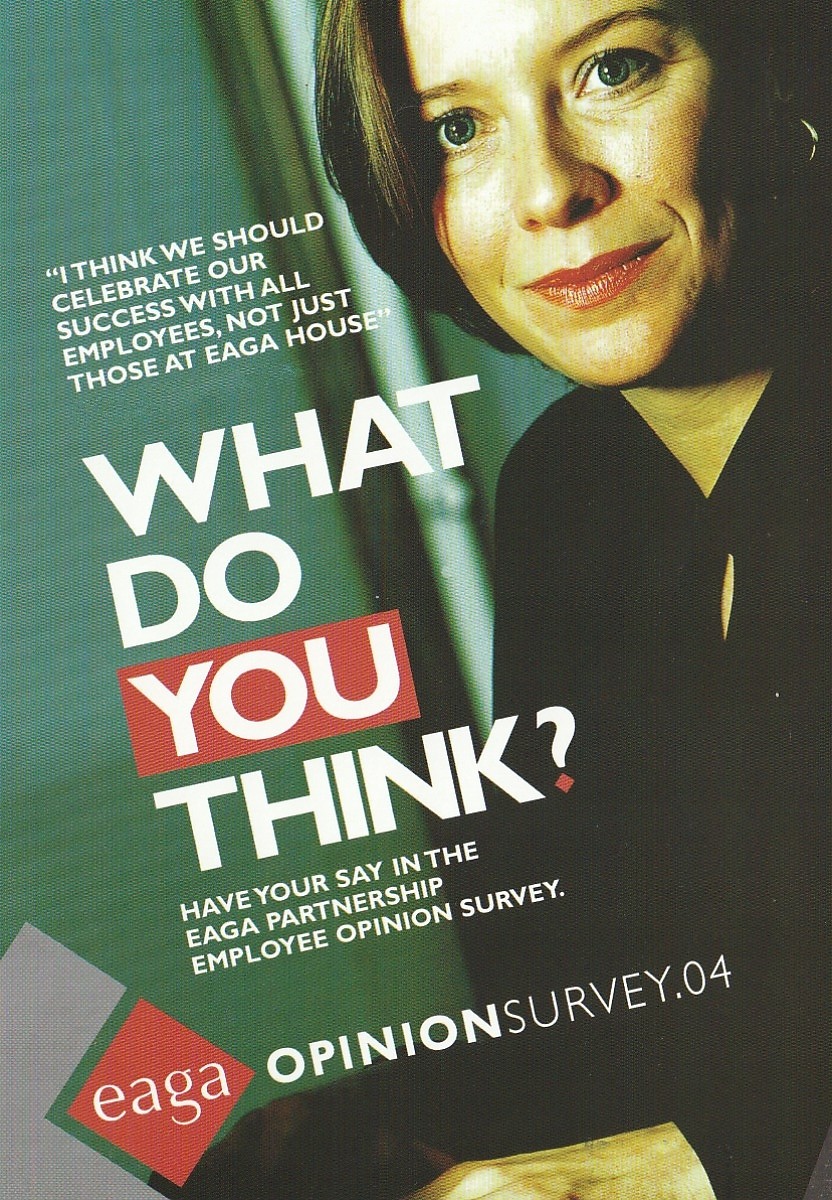
Visible reminders in communal spaces can be highly effective. Placing posters, banners, and flyers in high-traffic areas like break rooms, cafeterias, locker rooms, and entrances is a great way to keep the survey top of mind.
These reminders create opportunities for non-desk based staff to encounter the survey invitation throughout their day, reinforcing the message that their feedback is valuable and that the company genuinely wants to hear from them.
2. Use flyers and printed materials to inform
Hand out flyers (or even a printed memo) with QR codes or the survey link during team meetings or briefings.
These physical reminders allow employees to keep survey information on hand, making it more likely they will participate when they have time. Flyers also offer the opportunity to include FAQ's and other information about the survey (the why and what to expect).
3. Online comms goes beyond email
If your organisation has an intranet, messaging apps or a newsletter, promote the survey here!
But don't solely rely on more technology to support the email invite. In our experience only a subset of employees use these tools. There may be 'sub-channels' though that are very helpful - for example, in a multi-country survey we ran last year, managers made excellent use of their WhatsApp group chats to discuss and share the survey links in their teams.
4. Leverage manager-led support
Managers have a key role to play in survey participation. When employees see leadership is invested in their input, they are far more likely to get involved.
Managers and team leaders need to promote the survey in briefings, explain its purpose and how feedback leads to improvements (real life examples and stories are even better).
Sustain interest with gentle reminders
Keeping employees engaged after the initial announcement is critical. A well-timed reminder strategy keeps the survey top of mind without being intrusive.
Adding an update to any of the channels above helps keep the messages fresh. There's a reason Coca Cola runs so many adverts.
For example, you might use:
- An update to the newsletter - share the latest participation rate to build a sense of momentum
- Targeted reminders: email or chat reminders (online or IRL) with personalised messages emphasising the value of each employee's perspective
- Keep the survey on the agenda in meetings and team briefings
- Offer Drop-In sessions: Host brief Q&A sessions (virtually or in person), to walk employees through the survey process. This outreach can increase comfort levels and trust, and catch people who would otherwise stay silent
Bringing it all together
There are three stages to running a successful employee survey. Figuring out what you need to know and how to ask it, getting people to take part, and then making sense of all the data at the end of it.
Make your survey more accessible and inclusive by implementing a multi-channel approach for promoting the survey. A well thought-out and executed mini campaign will create a feedback process that reaches all your employees.
Firing off an email to all is easiest but doesn't always get across what we need to say, or capture what we need to hear.
Your results will not only provide a more complete picture, but the feedback is better quality. And the survey process itself feeds back into the culture of an organisation that cares for and values its employees too.
Related posts
- This article was originally a 90 seconds video on LinkedIn: a mini marketing campaign for your employee survey
- Where to start if your track record with past employee surveys hasn't been a great success
- Can Surveylab help? We have 20 years experience running surveys. Let's talk