
Challenging Assumptions with Employee Surveys
One of our clients feared losing staff to Lidl because the supermarket chain offered slightly higher pay. Could the employee survey find out what was really going on?
What we discovered was a relief!
Yes, pay mattered, but it wasn't in the top reasons why people would leave.
Far more important was the employees' alignment with the organisation's purpose and their role within, having leaders they looked up to, and a sense of being listened to and cared for.
If leadership had simply followed their initial assumption, they could have wasted time and resources focusing on the wrong issue. Instead, they learned what their people really valued. And made decisions that were grounded in reality not fear, and not assumptions.
What do you think?
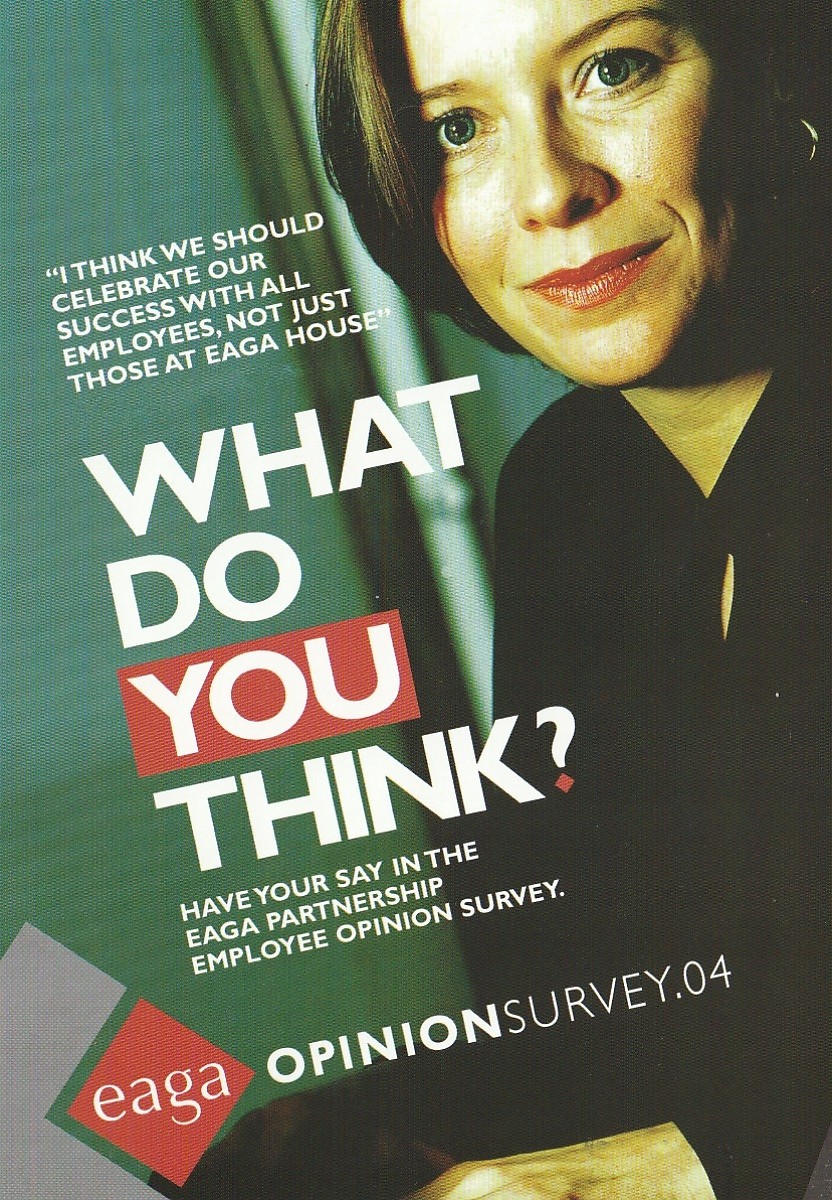
I have an old flyer from a survey campaign we ran nearly 20 years ago. The headline reads "What do you think?" It's funny because we still use that same messaging today when we promote surveys in our clients' organisations.
It sounds incredibly simple. But that question - when asked sincerely - opens the door to insights that can transform understanding or what's really going on in your organisation.
It's not always about pay
There is a great talk by Dan Pink - The surprising truth about what motivates us (10 min. animated video), where he shares various research studies that show money doesn't quite work how we think it does. Ultimately, if money [concerns] are off the table, other factors drive performance and motivation at work.
We see the same effect in our UK Workplace Study and our client work.
In our UK Workplace Study, of the top 10 drivers that have the greatest impact on engagement - statements concerning pay rank 6th and 7th. I trust senior management and I feel the organisation genuinely cares about the welfare of its staff are first and second.
The top 10 drivers vary between organisations - there are always different factors at play that affect the drivers. So we ask what is most important at this time, for the employees in this organisation? These drivers are often different between different groups of employees.
Testing our assumptions: the benefit of employee voice
Looking across an entire organisation (or perhaps even a department) our information is probably incomplete. There are likely to be substantial differences between groups of people (e.g. job roles, where they work, who with) and the survey will help confirm understanding, fill in knowledge gaps or open fresh perspective.
Recognising these differences is critical because without that knowledge, decision-makers risk applying broad solutions to very specific problems. And that rarely works.
At the heart of every successful survey is a challenge: challenging the assumptions that guide our decisions. When leaders assume they know what their employees want, they're often working with an incomplete picture. That's why we always advocate for creating a culture of listening - where employees see value and feel comfortable sharing their views, and leadership is ready to act on those insights.
"What do you think?" It's a simple question, but the answers can transform your organisation in ways you may not expect.
Your next employee survey:
Not sure if you're getting all the insight you need from employee feedback? We can we help - book a 30 mins insights call with Dan (making sense of the data, discuss past results, getting staff to engage with your survey, anything else?) or contact Surveylab by email /phone.